Keynotes
New Molecules in Phase 2b – Proof of Concept and Beyond
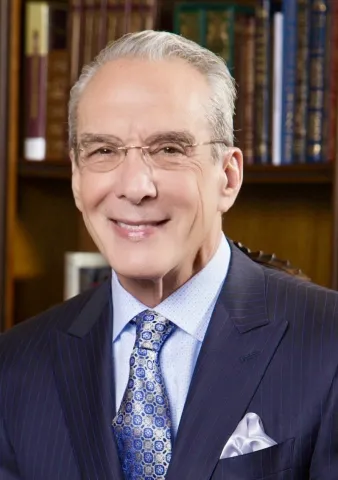
Jeffrey Cummings, MD, Joy Chambers-Grundy Professor of Brain Science, Director of the Chambers-Gundy Center for Transformative Neuroscience, Co-Director of the Pam Quirk Brain Health and Biomarker Laboratory, Department of Brain Health, School of Integrated Health Sciences, University of Nevada Las Vegas (UNLV), Las Vegas, NV (United States)
UNLV research professor Jeffrey L. Cummings is a neurologist globally recognized for his contributions to Alzheimer's research, drug development, and clinical trials. He serves as the Joy Chambers-Grundy professor of brain science and director of the Chambers-Grundy Center for Transformative Neuroscience at the Kirk Kerkorian School of Medicine's Department of Brain Health.
Dr. Cummings leads the UNLV Clinical Trials Observatory, the world’s only research observatory devoted exclusively to analyzing the pipeline of Alzheimer's drugs in clinical trials to better inform drug development decisions. He also heads a biomarker observatory, which captures and categorizes emerging information on blood tests, brain scans, and digital devices related to Alzheimer's disease.
Prior to joining UNLV in 2019, Dr. Cummings served as founding director of the Cleveland Clinic Lou Ruvo Center for Brain Health in Las Vegas, as well as two UCLA entities — the Mary S. Easton Center for Alzheimer’s Disease Research, and the Deane F. Johnson Center for Neurotherapeutics.
Named a “Rock Star of Science” by Gentleman’s Quarterly, Dr. Cummings — a fellow of the American Academy for the Advancement of Science — has published 43 books and more than 900 peer-reviewed articles on neuropsychiatry, Alzheimer’s disease, and clinical trials.
His numerous recognitions for his scientific and leadership contributions include the American Association of Geriatric Psychiatry’s Distinguished Scientist Award, Melvin R. Goodes Prize for Excellence in Drug Development from the Alzheimer's Drug Discovery Foundation, Society for Behavioral and Cognitive Neurology’s Lifetime Achievement Award, and the national Alzheimer’s Association’s Bengt Winblad Lifetime Achievement Award. In 2024, he was ranked by ScholarGPS as the world's top scholar for his lifetime contributions in the areas of dementia and drug development.
A Glimpse of the Future: How Diagnostics, Therapies, Trials, and Concepts of Prevention Must Evolve
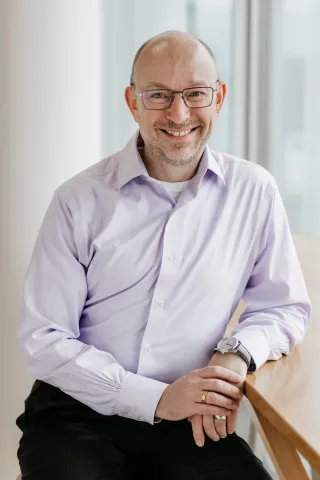
Geoffrey A. Kerchner, MD, Vice President and Global Head of Neurodegeneration, F. Hoffmann-La Roche, Ltd., Basel (Switzerland)
Geoffrey A. Kerchner, MD, PhD is a neurologist and neuroscientist serving as Vice President and Global Head of Neurodegeneration at F. Hoffmann-La Roche, Ltd., in Basel, Switzerland, where he oversees all late-stage clinical development efforts in Alzheimer's, Parkinson's, and Huntington's diseases. Over his career, Dr. Kerchner has contributed to the fight against Alzheimer's disease as a basic scientist, a clinical neuroimaging scientist, a clinician, a patient advocate, and a clinical trial site investigator before moving to Genentech/Roche in 2015. There, he led clinical development teams for semorinemab and gantenerumab, among other programs, before moving into leadership positions, first as VP and Head of Early Development in Neuroscience and Rare Diseases and then in his current role. Dr. Kerchner studied at Harvard College (AB summa cum laude), Washington University School of Medicine (MD, PhD), and UCSF (residency and fellowships), and served on the faculty at Stanford University School of Medicine.
Integration of Fluid Imaging and other Multimodal Biomarkers towards Optimizing Disease Understanding and New Therapeutics
Susan Landau,PhD, Research Neuroscientist, Helen Wills Neuroscience Institute University of California, Berkeley, CA (United States)
Dr Landau's research focuses on brain changes that occur in healthy aging and Alzheimer’s disease. She uses a variety of neuroimaging techniques, other biomarkers, and health information to understand the neurophysiological processes underlying cognitive decline in Alzheimer's disease and related dementias. Her research has a particular emphasis on the roles of amyloid and tau, measured with positron emission tomography (PET), and neurodegeneration, measured with magnetic resonance imaging (MRI).
She is the principal investigator of POINTER Imaging study, an ancillary study to the U.S. Study to Protect Brain Health Through Lifestyle Intervention to Reduce Risk (U.S. POINTER) trial. This 2-year clinical trial is examining the influence of multidomain lifestyle interventions on brain changes in at-risk older individuals across the U.S. She also oversees PET pipeline development and analysis in multisite longitudinal studies including the Alzheimer’s Disease Neuroimaging Initiative (ADNI), the ADNI Vietnam War Veterans study, the ADNI Late Life Depression study, and the Standardized Centralized Alzheimer’s & Related Dementia Neuroimaging (SCAN) study. She has led curation and quantification of over 8000 PET images acquired with a variety of PET tracers and has made this data available to the scientific community for research, education, and clinical trial development. Dr. Landau received the Human Amyoid Imaging Christopher Clark Award in 2018.
Beyond Amyloid and Tau: Roles of Proteomics in Clinical Trials
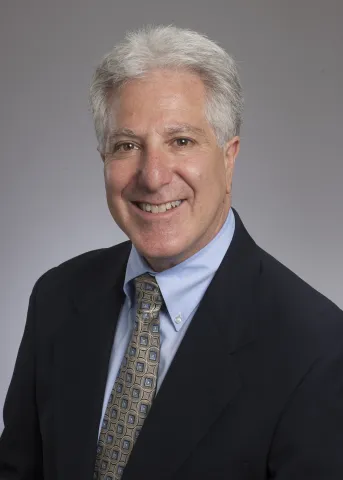
Allan Levey, MD, PhD, Professor of Neurologyn Emory University's School of Medicine, Director, Emory's Alzheimer's Disease Research Center, Emory University, Atlanta, GA (Unites States)
Allan Levey, MD, PhD, is a professor in the Department of Neurology at Emory University's School of Medicine, as well as the director of Emory's Alzheimer's Disease Research Center. He has secondary faculty appointments in the Departments of Pharmacology, Psychiatry and Behavioral Sciences.
Levey is an internationally recognized expert in neurodegenerative disorders. His work has contributed to understanding the brain systems and mechanisms involved in disorders such as Alzheimer's and Parkinson's diseases, as well as in identifying molecular targets for new therapeutic strategies. He has more than 250 research publications and has won several awards, including the Derek Denny-Brown Neurological Scholar Award from the American Neurological Association, the Heikkila Research Scholar Award from the National Parkinson Foundation, the Health Advancement Research Award from Community Health Charities and the Team Hope Award for Medical Leadership from the Huntington's Disease Society of America. In addition, he was inducted into the Johns Hopkins Society of Scholars.
Levey consistently has been listed among one of the Best Doctors in America. His research interests include fundamental research into the cause of Alzheimer's disease and related neurodegenerative disorders, and development of new biomarkers and treatments.